


How does the lithium-manganese chemistry system ensure the intrinsic safety of button batteries?
Release Time : 2025-12-25
In today's ubiquitous microelectronic devices, the button battery, though small, plays a crucial role in maintaining system operation. From medical thermometers to smart door locks, from children's toys to car tire pressure sensors, battery leaks, bulges, or even fires can damage delicate circuits and potentially endanger personal safety. Therefore, the lithium-manganese chemistry system (Li-MnO₂), as the core technology of disposable 3V button batteries, is widely regarded as a model of "intrinsic safety" due to its inherent chemical stability and multiple safety mechanisms.
First, the lithium-manganese system employs a solid-state reaction mechanism, fundamentally avoiding the risk of violent exothermic reactions. Unlike some rechargeable lithium batteries that rely on repeated lithium-ion insertion/extraction in a liquid electrolyte, the lithium-manganese button battery slowly releases energy through a solid-phase reaction between the lithium metal anode and the manganese dioxide cathode during discharge. The entire process is gentle and controllable, producing no gaseous byproducts and is less prone to chain-like thermal runaway. Even under abnormal conditions such as short circuits, overloads, or high external temperatures, the internal chemical reaction rate remains low, making it difficult to accumulate enough energy to cause combustion or explosion.
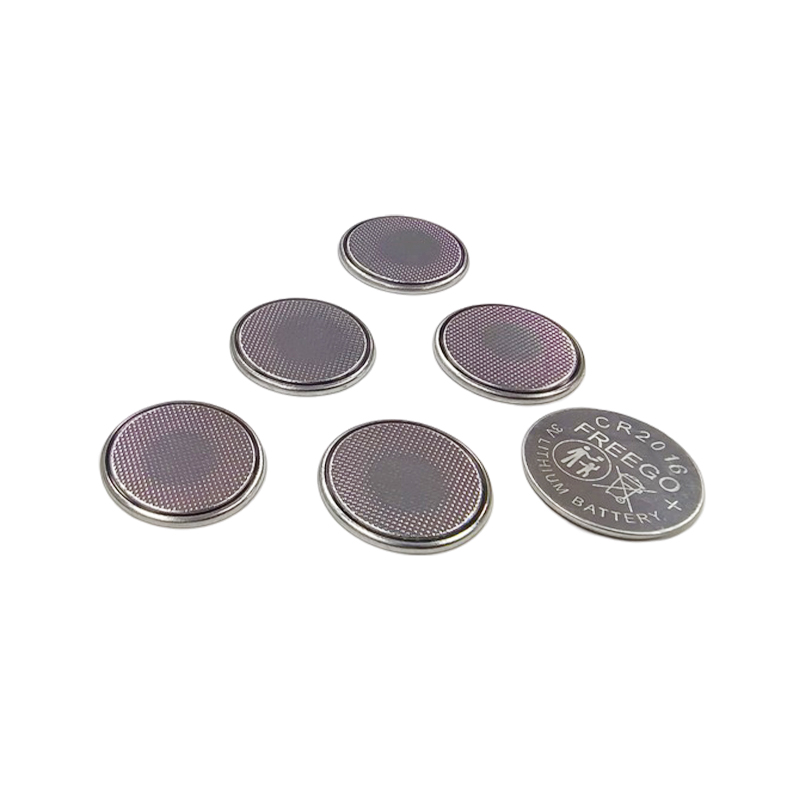
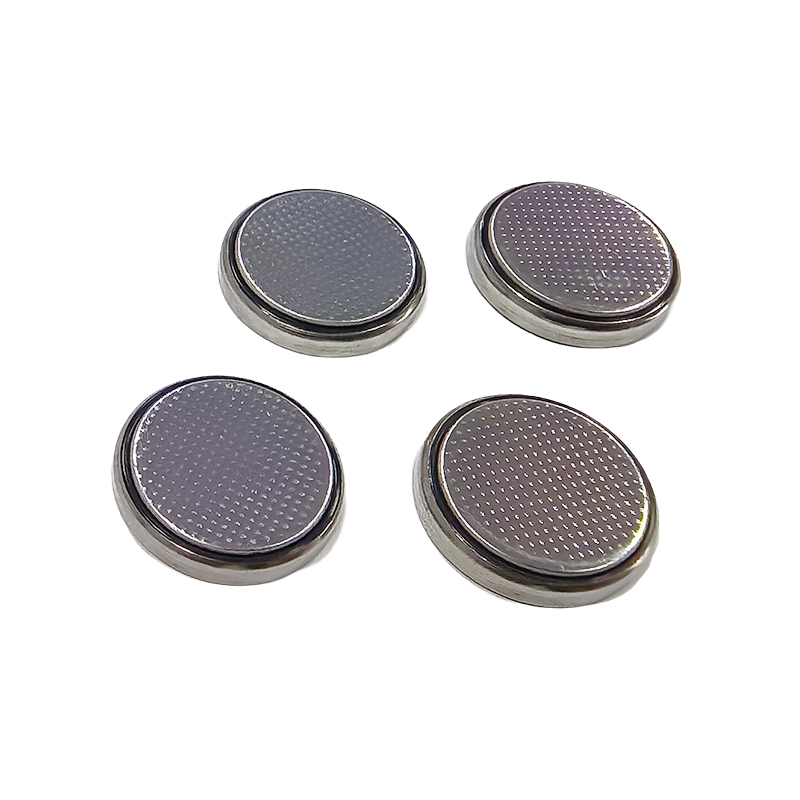
Secondly, the battery structure is highly sealed, eliminating external interference and internal leakage. The CR series button battery uses a laser-welded stainless steel casing, completely enclosing the positive electrode, negative electrode, and electrolyte in an inert environment. This fully sealed design not only prevents moisture and oxygen intrusion that could lead to material degradation but also ensures that the electrolyte will not leak—a major cause of device damage in traditional alkaline button batteries. Even after long-term storage or use in high-humidity environments, the casing remains robust, protecting the internal chemical system from interference.
Furthermore, the electrolyte itself possesses high stability and low reactivity. Lithium-manganese batteries typically use a non-aqueous electrolyte composed of organic solvents and lithium salts. This type of system is chemically extremely stable over a range of room temperature to medium-high temperatures, is not easily decomposed, and does not undergo side reactions with the electrode materials. Simultaneously, the manganese dioxide positive electrode material itself has good thermal stability and does not release oxygen when heated (unlike some oxygen-containing positive electrode materials that support combustion), further reducing the risk of fire.
Furthermore, the non-rechargeable design itself is a safety barrier. Lithium-manganese button batteries like the CR1632 are disposable primary batteries, explicitly prohibited from being recharged. This seemingly restrictive characteristic actually avoids safety hazards such as lithium dendrite growth and internal short circuits caused by accidental charging. Users don't need to worry about operational errors, and device manufacturers don't need to design additional complex protection circuits, simplifying the safety logic from the source of use.
At a deeper level, material selection and manufacturing processes together construct multiple layers of redundant protection. The high-purity lithium metal anode undergoes special treatment to reduce surface activity; the cathode formula is optimized to improve reaction uniformity; the separator material has heat-shrinkage resistance; the entire assembly process is completed in a dry, inert atmosphere, minimizing the removal of moisture and impurities. These details combined allow the battery to maintain structural integrity and functional stability even when facing real-world challenges such as drops, compression, and sudden temperature changes.
Ultimately, the inherent safety of lithium-manganese button batteries does not rely on external safety devices or complex management systems, but rather stems from the "mildness" and "restraint" of its chemical system itself—orderly energy release, material compatibility, and a reliable, sealed structure. It doesn't pursue extreme power, but focuses on providing long-term, stable, and worry-free power support within a tiny space. When a CR1632 quietly resides within an electronic watch or medical patch, working silently for years without being noticed, this is the ideal state of safety: uninterrupted reliability without warning. In the world of miniature power supplies, true power often lies hidden in silent stability.
First, the lithium-manganese system employs a solid-state reaction mechanism, fundamentally avoiding the risk of violent exothermic reactions. Unlike some rechargeable lithium batteries that rely on repeated lithium-ion insertion/extraction in a liquid electrolyte, the lithium-manganese button battery slowly releases energy through a solid-phase reaction between the lithium metal anode and the manganese dioxide cathode during discharge. The entire process is gentle and controllable, producing no gaseous byproducts and is less prone to chain-like thermal runaway. Even under abnormal conditions such as short circuits, overloads, or high external temperatures, the internal chemical reaction rate remains low, making it difficult to accumulate enough energy to cause combustion or explosion.
Secondly, the battery structure is highly sealed, eliminating external interference and internal leakage. The CR series button battery uses a laser-welded stainless steel casing, completely enclosing the positive electrode, negative electrode, and electrolyte in an inert environment. This fully sealed design not only prevents moisture and oxygen intrusion that could lead to material degradation but also ensures that the electrolyte will not leak—a major cause of device damage in traditional alkaline button batteries. Even after long-term storage or use in high-humidity environments, the casing remains robust, protecting the internal chemical system from interference.
Furthermore, the electrolyte itself possesses high stability and low reactivity. Lithium-manganese batteries typically use a non-aqueous electrolyte composed of organic solvents and lithium salts. This type of system is chemically extremely stable over a range of room temperature to medium-high temperatures, is not easily decomposed, and does not undergo side reactions with the electrode materials. Simultaneously, the manganese dioxide positive electrode material itself has good thermal stability and does not release oxygen when heated (unlike some oxygen-containing positive electrode materials that support combustion), further reducing the risk of fire.
Furthermore, the non-rechargeable design itself is a safety barrier. Lithium-manganese button batteries like the CR1632 are disposable primary batteries, explicitly prohibited from being recharged. This seemingly restrictive characteristic actually avoids safety hazards such as lithium dendrite growth and internal short circuits caused by accidental charging. Users don't need to worry about operational errors, and device manufacturers don't need to design additional complex protection circuits, simplifying the safety logic from the source of use.
At a deeper level, material selection and manufacturing processes together construct multiple layers of redundant protection. The high-purity lithium metal anode undergoes special treatment to reduce surface activity; the cathode formula is optimized to improve reaction uniformity; the separator material has heat-shrinkage resistance; the entire assembly process is completed in a dry, inert atmosphere, minimizing the removal of moisture and impurities. These details combined allow the battery to maintain structural integrity and functional stability even when facing real-world challenges such as drops, compression, and sudden temperature changes.
Ultimately, the inherent safety of lithium-manganese button batteries does not rely on external safety devices or complex management systems, but rather stems from the "mildness" and "restraint" of its chemical system itself—orderly energy release, material compatibility, and a reliable, sealed structure. It doesn't pursue extreme power, but focuses on providing long-term, stable, and worry-free power support within a tiny space. When a CR1632 quietly resides within an electronic watch or medical patch, working silently for years without being noticed, this is the ideal state of safety: uninterrupted reliability without warning. In the world of miniature power supplies, true power often lies hidden in silent stability.